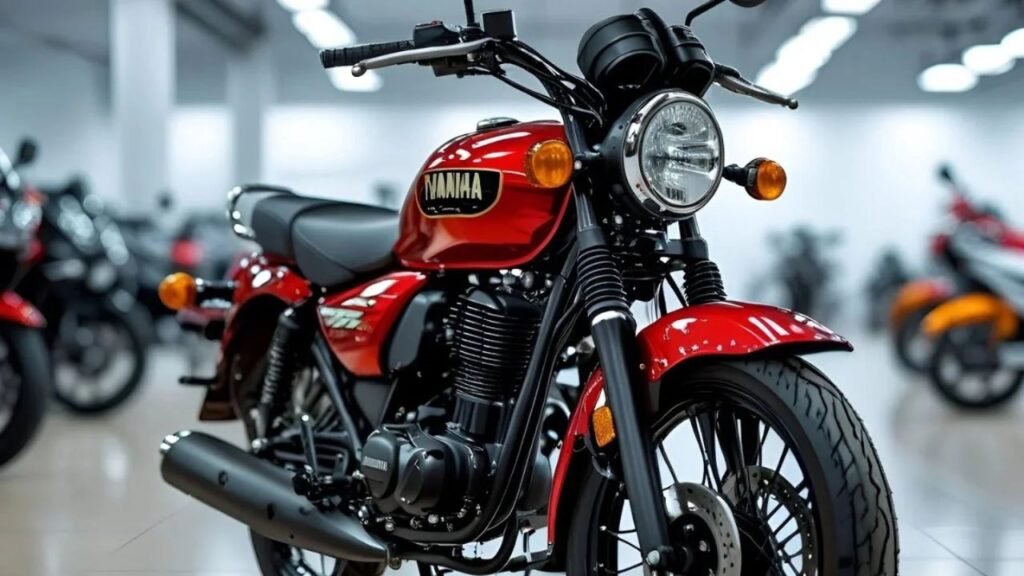
The Yamaha RX100 is more than just a motorcycle; it is a legend that has captured the hearts of biking enthusiasts for decades. Even years after it vanished from showrooms, the RX100 remains an icon of speed, style, and nostalgia. Introduced in the mid-1980s, the Yamaha RX100 revolutionized the Indian two-wheeler market. At a time when the streets were dominated by slow, utilitarian bikes, the RX100 arrived like a breath of fresh air—compact, powerful, and thrilling to ride.
For many riders, it was not merely a vehicle but a statement of attitude, a symbol of rebellion, and a badge of pride. Lightweight, agile, and equipped with a distinctive two-stroke engine, the Yamaha RX100 offered an unmatched riding experience that continues to be celebrated today. Let’s explore why this motorcycle remains one of the most iconic machines in India’s motorcycling history.
Yamaha RX100: Technical Overview
Here’s a quick look at what made the Yamaha RX100 stand out technically:
| Feature | Details |
|---|---|
| Engine | 98cc, air-cooled, 2-stroke |
| Maximum Power | 11 HP (approx.) |
| Transmission | 4-speed manual |
| Weight | Around 100 kg |
| Top Speed | ~100 km/h |
| Brakes | Drum brakes (front and rear) |
| Fuel Economy | 25–30 km/l (tuning dependent) |
| Suspension | Telescopic forks (front), Swingarm (rear) |
| Production Span | 1985 – 1996 |
| Notability | Legendary performance, iconic sound |
Revolutionizing Indian Roads
When the Yamaha RX100 hit the market in 1985, it was unlike anything Indian riders had experienced. While most bikes were slow and built purely for commuting, the RX100 combined compact dimensions with remarkable performance. Its 98cc engine delivered nearly 11 horsepower, offering blistering acceleration and making it an instant favorite among young riders craving speed.
Weighing just about 100 kg, the RX100 was incredibly agile. Its power-to-weight ratio allowed riders to zip through urban traffic with ease and enjoy open-road thrills like never before. This combination of speed, reliability, and affordability redefined the perception of motorcycles in India, establishing the Yamaha RX100 as a trailblazer in the performance segment.
A Symphony of Sound
One of the most memorable aspects of the Yamaha RX100 is its exhaust note. The two-stroke engine produced a sharp, raspy roar that became instantly recognizable. This wasn’t just noise—it was music to a biker’s ears. The tuned expansion chamber exhaust gave the RX100 its signature sound, turning heads wherever it rode.
Even decades later, hearing a well-maintained RX100 revving up evokes nostalgia among veteran bikers. The sound represented performance, passion, and pride, making the Yamaha RX100 not only a ride but an experience.
Timeless Design
Visually, the Yamaha RX100 epitomized minimalistic charm. Its small, rounded fuel tank, flat cushioned seat, chrome mudguards, spoked wheels, and round headlamp created a clean, purposeful look. Unlike modern bikes with fairings and digital consoles, the RX100’s simplicity contributed to its rugged appeal.
The exposed engine and frame gave it a muscular, raw vibe, while bright color schemes and bold decals added youthful energy. Even today, restored RX100s parked alongside contemporary motorcycles often draw more attention, proving that classic design never goes out of style.
The Ride That Made You Smile
Performance was the heartbeat of the Yamaha RX100. The bike had a responsive throttle, delivering instant acceleration with just a twist of the wrist. The 4-speed gearbox ensured smooth, precise gear shifts, enhancing the overall ride experience.
Whether navigating congested city streets or cruising along winding country roads, the RX100 offered agility, balance, and sheer fun. Its telescopic front forks and rear twin shock absorbers provided a surprisingly comfortable ride over rough roads, while the drum brakes, though simple, were effective given the bike’s lightweight frame.
Built to Last
Durability was another hallmark of the Yamaha RX100. Its straightforward mechanical design meant fewer parts could fail, and basic tools were sufficient for maintenance. The engine, if properly cared for, could last decades.
Even today, spare parts—whether original, refurbished, or aftermarket—remain accessible, allowing enthusiasts to restore and maintain their RX100s. From piston rings to clutch plates, components are still available for those willing to hunt. It’s common to see an RX100 from the late ’80s firing up with a single kick, a testament to Yamaha’s engineering excellence.
The Racer’s Weapon
The Yamaha RX100 wasn’t confined to city streets; it became a favorite among racers. Local drag races and hill climbs often featured RX100s, tuned for maximum performance. Riders would increase engine capacity, modify the expansion chamber, port the cylinders, and tweak carburetors to convert this compact bike into a pocket rocket.
Thanks to its light weight and agile handling, the RX100 often outperformed larger motorcycles in short sprints. For a generation of racers, it was their first introduction to motorsport glory, earning respect for its reliability and performance when properly tuned.
The Collector’s Trophy
As the years pass, the Yamaha RX100 has become a prized collector’s item. Vintage enthusiasts seek models with matching chassis and engine numbers. A well-maintained or restored RX100 can fetch anywhere between ₹1 lakh to ₹2 lakh or more, depending on originality and condition.
Restorers go to great lengths to source authentic paint, badges, and OEM components. Some even import parts to ensure accuracy. Owning an RX100 today isn’t just owning a motorcycle—it’s preserving a piece of Indian biking heritage.
FAQs About Yamaha RX100
Why was the Yamaha RX100 discontinued?
It was discontinued in 1996 due to stricter emission norms. Its two-stroke engine could not meet new pollution standards without significant redesign.
Can you still buy a Yamaha RX100?
While brand-new units aren’t available, pre-owned and restored RX100s are commonly sold online, in auctions, and among collectors.
Is it practical for daily use?
Yes, with proper maintenance. However, it lacks modern conveniences like electric start, disc brakes, or fuel injection and produces lower mileage compared to four-stroke bikes.
Will Yamaha relaunch the RX100?
Rumors suggest a modern revival, possibly with a four-stroke engine. Official confirmation is pending, but a comeback would excite fans across India.
Yamaha RX100: A True Legend
More than a machine, the Yamaha RX100 represents an era. A time when motorcycles were simple, soulful, and connected to the rider. Its raw performance, iconic sound, and minimalistic design make it unforgettable.
From street corners to race tracks, from youthful dreams to collector’s showcases, the RX100 has lived many lives—and each one legendary. Even in today’s era of electric and high-tech bikes, the RX100’s legacy endures. Hearing that familiar exhaust note is like hearing history ride by—proof that some machines don’t just transport you; they leave an everlasting impression.
For anyone passionate about motorcycles, the Yamaha RX100 remains a symbol of speed, simplicity, and pure riding joy—a motorcycle that will continue to inspire generations to come.
Some Important Link
| Download News APP | Click Here |
| WhatsApp Group | Click Here |
| Home Page | Click Here |